2021 to 2022

Amazon Shopping Assistant

The customized shopping assistant that elevates brand voice.

Product Design User Research E-Commerce
Amazon Shopping Assistant cover
Challenge
Brands consistently reported that their products lose their uniqueness on Amazon, becoming homogeneous and being forced to compete solely on price. Amazon introduced a brand-specific shopping assistant that brands can customize to advocate for their products.
  • Brands spend millions building loyalty, but face knockoffs and cheaper variants from nameless competitors that mute their brand voice.
  • Shoppers are overwhelmed by too many products, spending hours researching, and their purchases often still don't satisfy their needs.
  • Buyers frequently face decision paralysis from diverse, complicated product offerings across brands.
Users
Brand Loyal Shopper
Starts the shopping journey by identifying specific brands they trust, and primarily shops on brand pages for a tailored experience.
Price Sensitive Shopper
Uses Amazon to shop for the best deals, and is willing to purchase off-brand products.
Product Team & My Role
Lead UI/UX Designer & Researcher: owned market research, competitive analysis, customer segmentation, UI, branding, UX, and usability testing end-to-end, working directly with a small development and product team.
Product Designer and Researcher icon
Product Designer & Researcher

Owned market research, competitive analysis, customer segmentation, UI, branding, UX, and usability testing.

Development Team icon
Development Team

Three engineers covering frontend and backend implementation.

Product Manager icon
Product Manager

Owned the roadmap and engineer resource allocation.
Design for Maximum Brand Customization
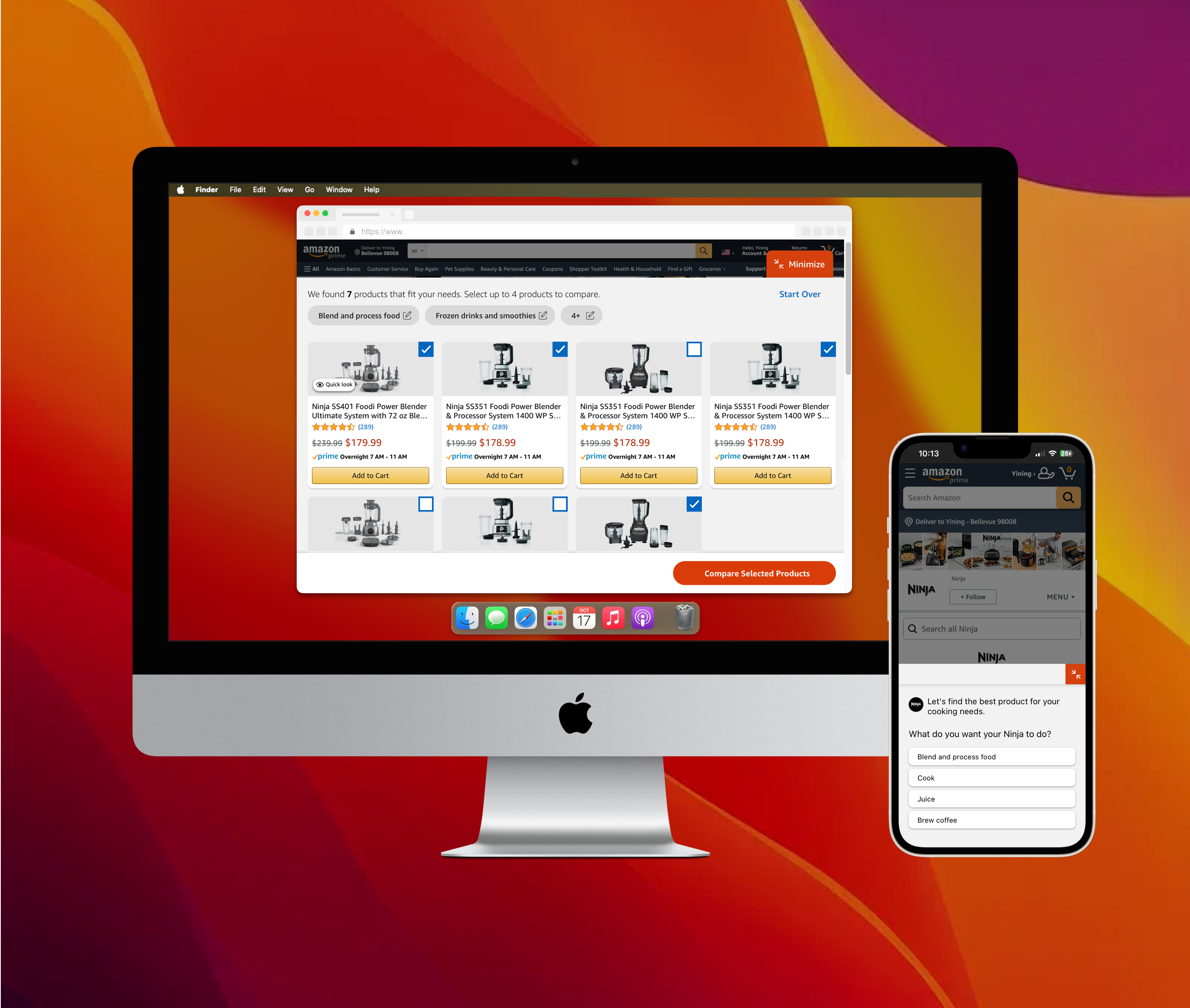
Every brand's page is different, with its own layout, catalog size, and amount of available space. To serve that diversity instead of forcing one layout on everyone, I designed a suite of shopping assistant options so each brand could pick the experience that actually fits their page.
  • Standardized on button-based interactions, since shoppers consistently preferred guided buttons over typing.
  • This was 2021-2022, pre-GenAI, when natural language processing couldn't yet reliably handle open-ended input.
  • Offered placements from a dedicated page to a compact banner to a floating button, fitting brands with tight or spacious page real estate alike.
  • Kept every answer editable on screen, since shopping habits are fluid and criteria often change mid-flow.
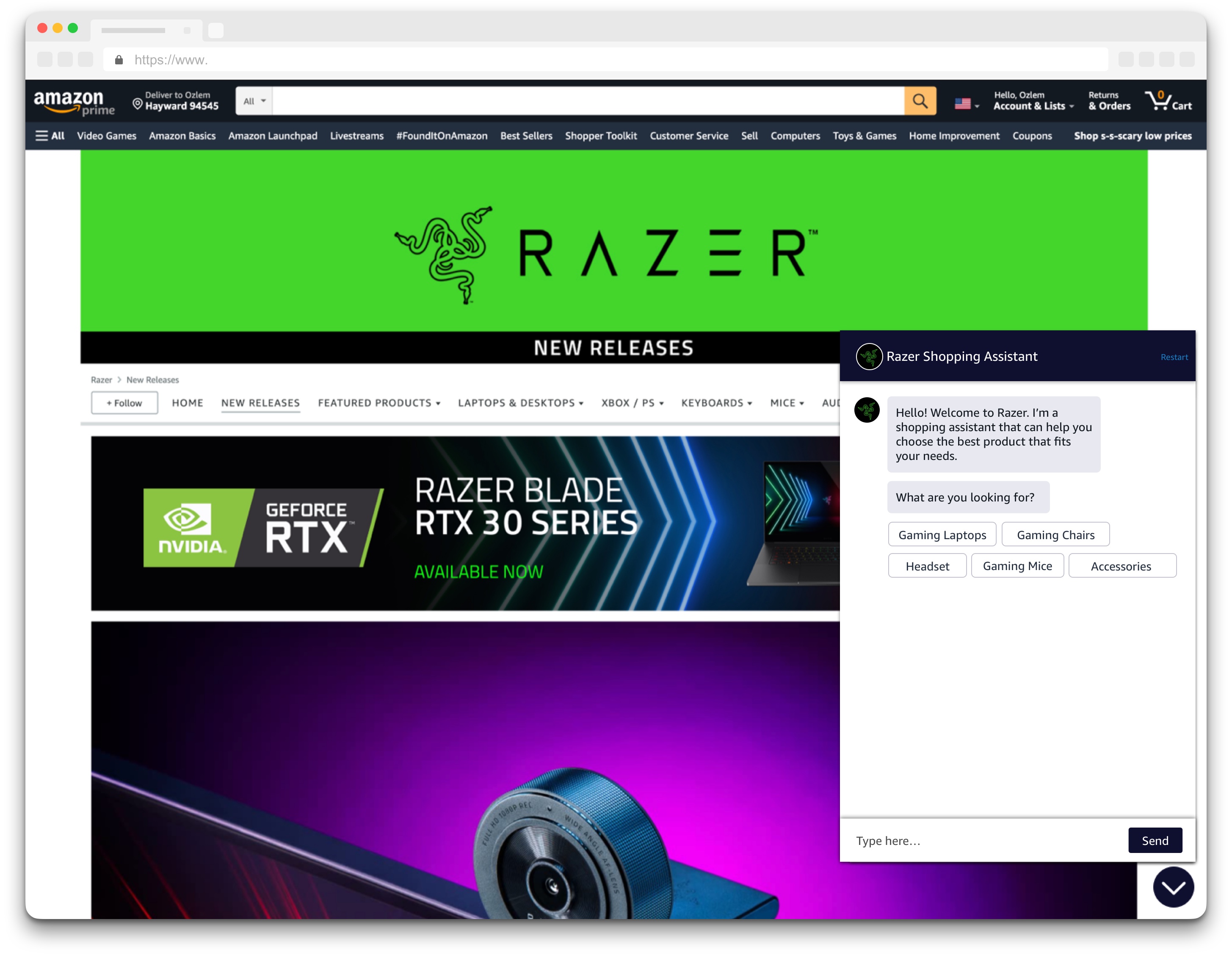
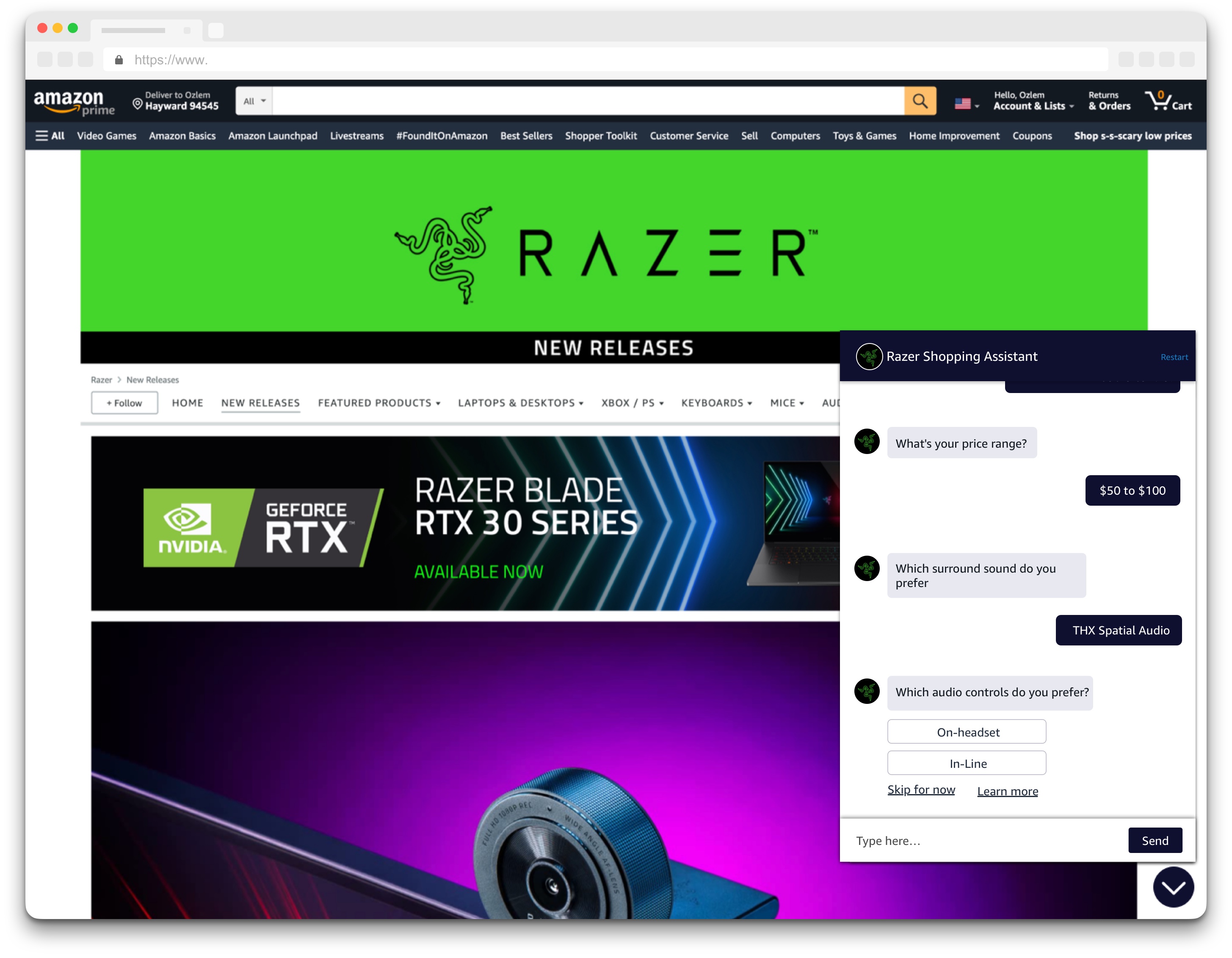
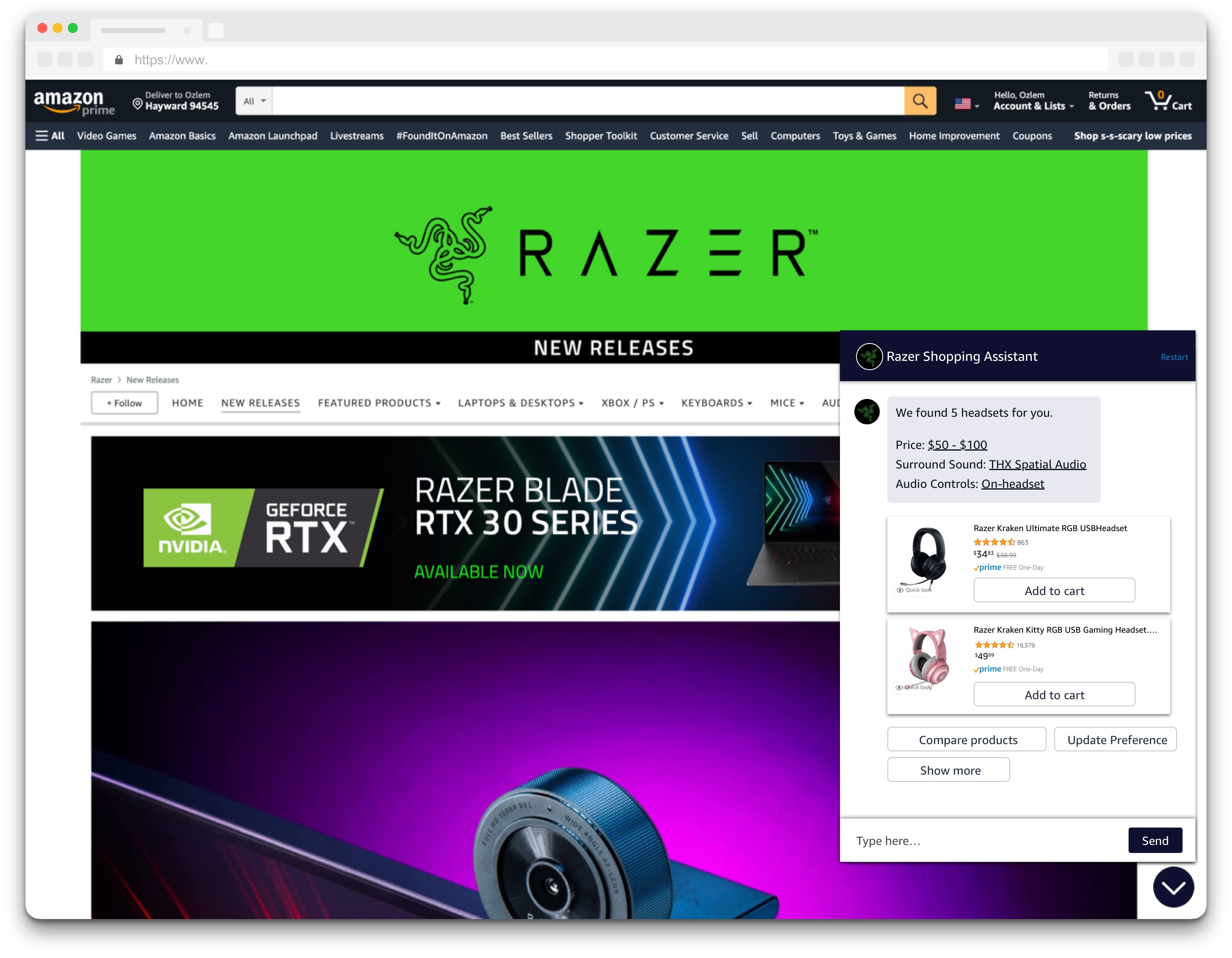
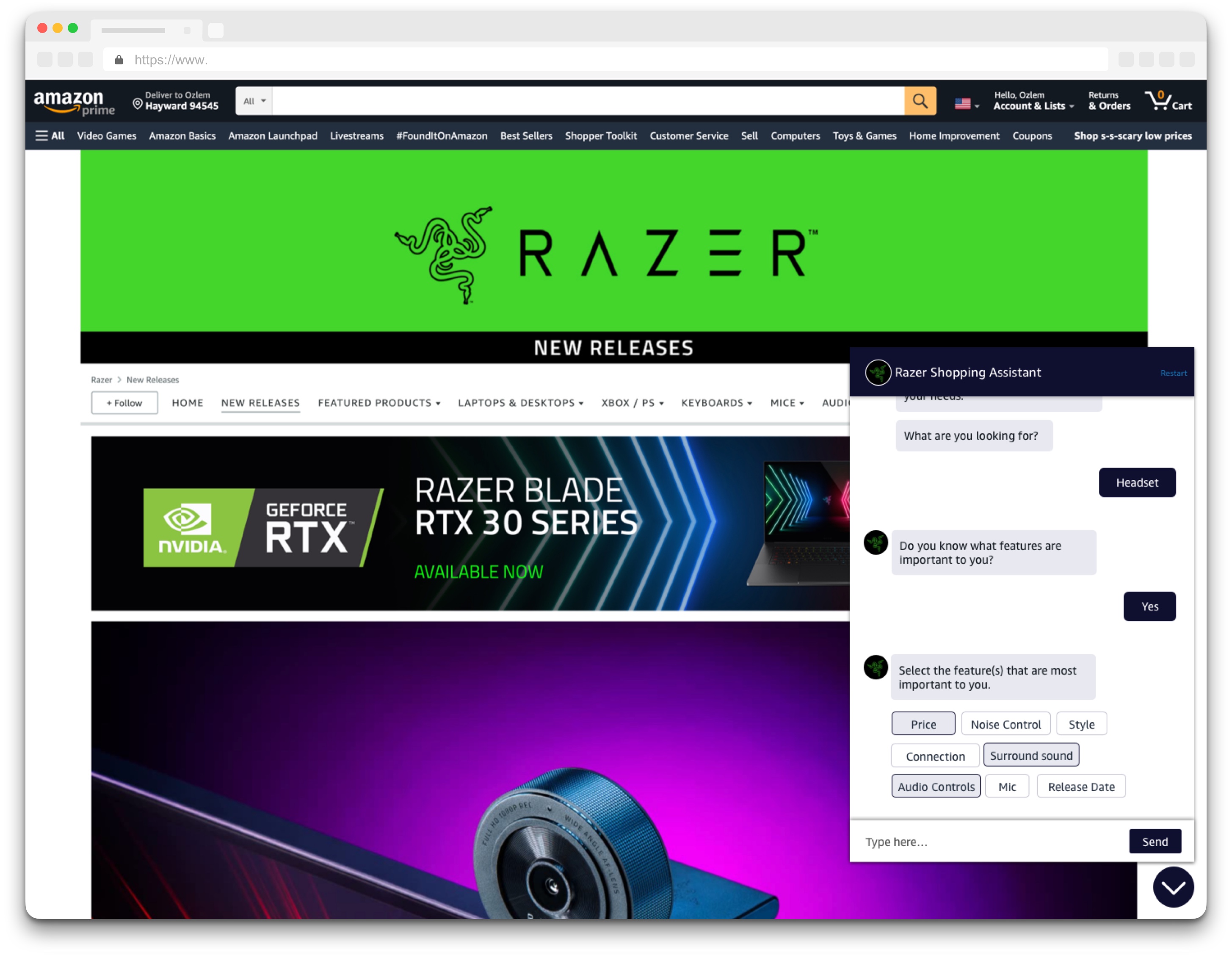
Button-Based Chatbot on Razer Button-Based Chatbot: category buttons Button-Based Chatbot: audio control preference Button-Based Chatbot: matching product recommendations
Hover to explore
Button-Based Chatbot

For brands who want a familiar, conversational feel without typing. Shown here on Razer, it guides shoppers to a recommendation through buttons in a docked chat panel.
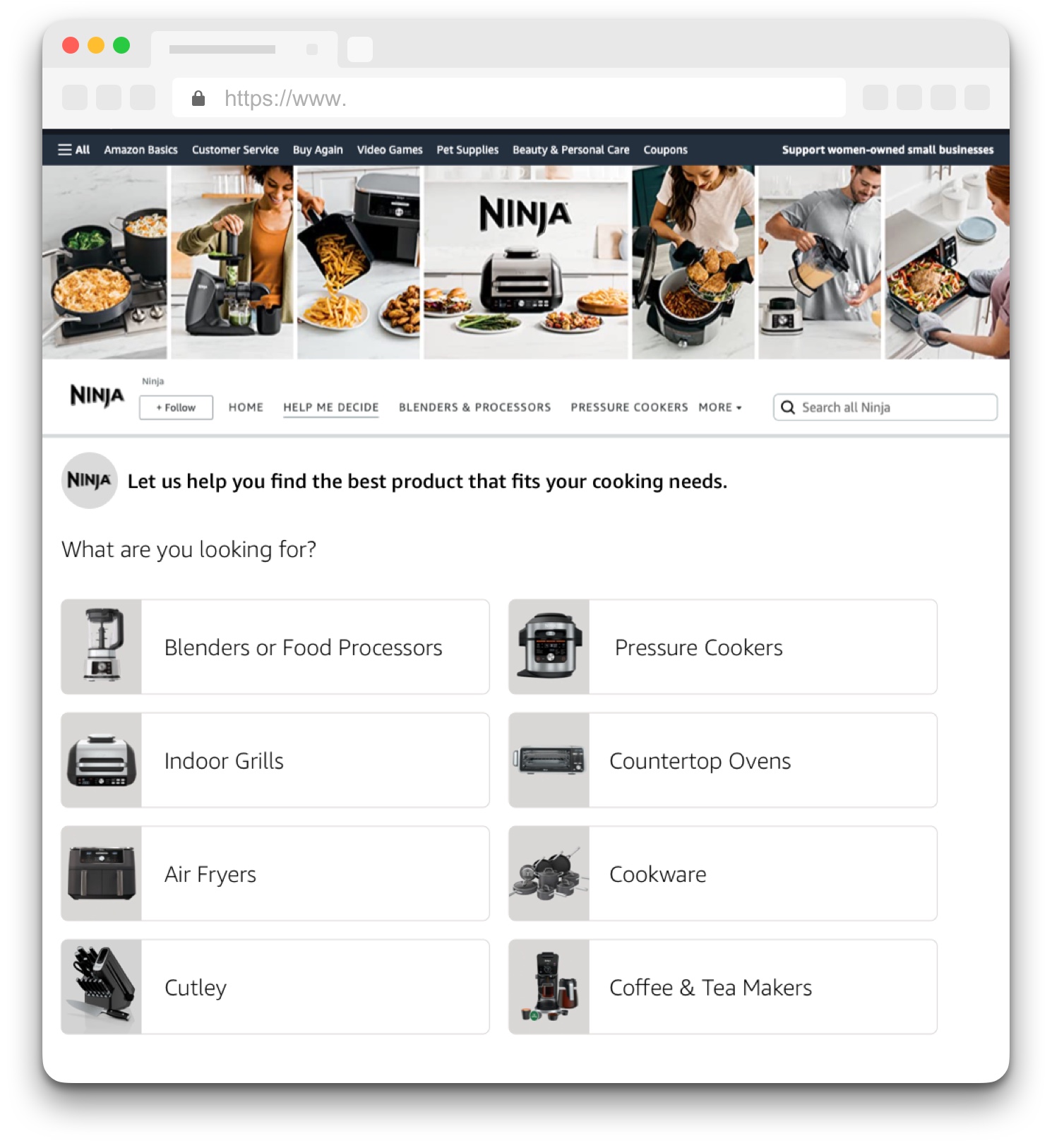
Page-Turn
Page-Turn

For brands who want to reward shoppers with focus. A dedicated page, reached through the brand's nav bar, gives the assistant room to breathe without competing with the storefront.
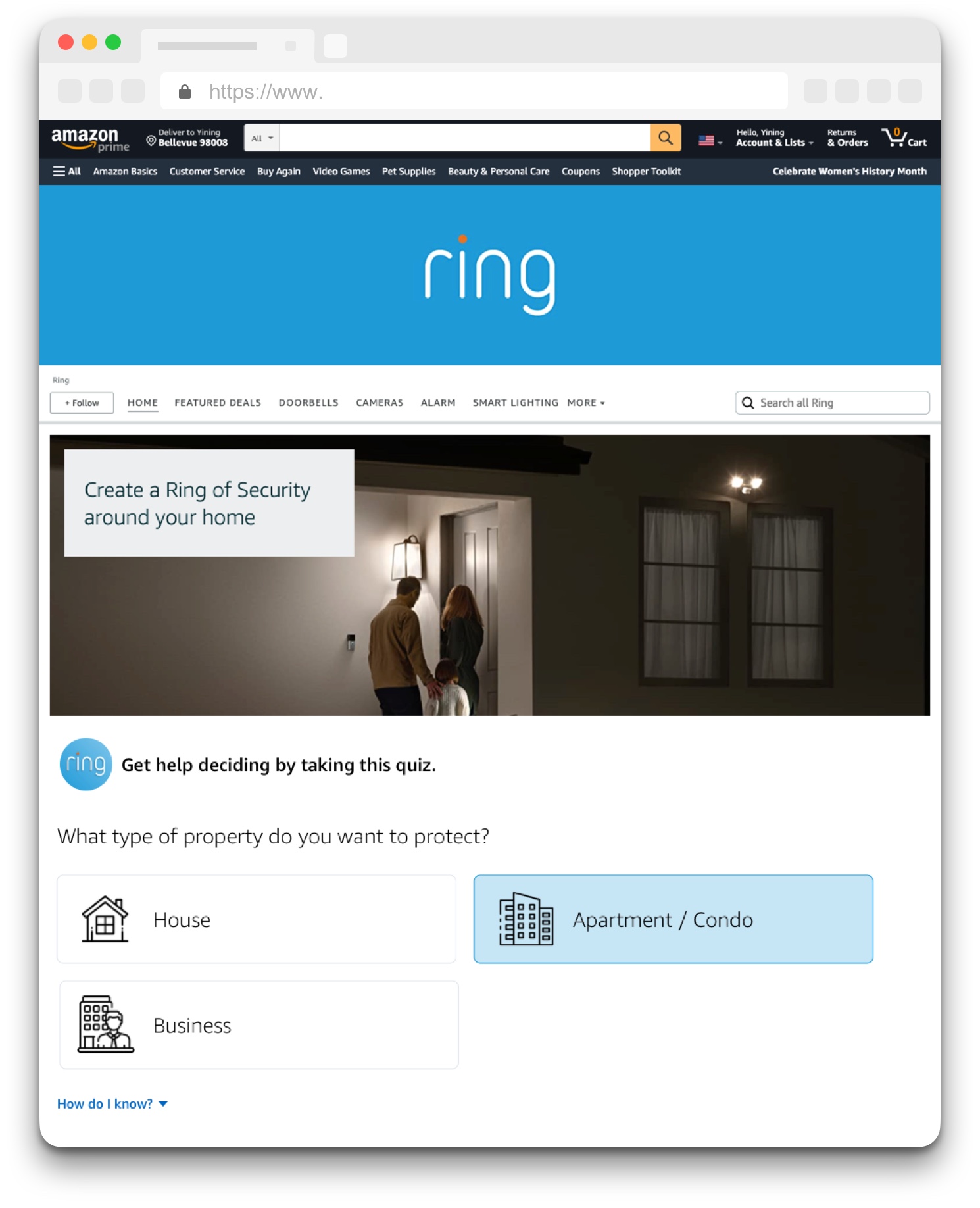
Banner
Banner

For brands who want the assistant front and center, visible to every visitor immediately, at the cost of pushing other content down.
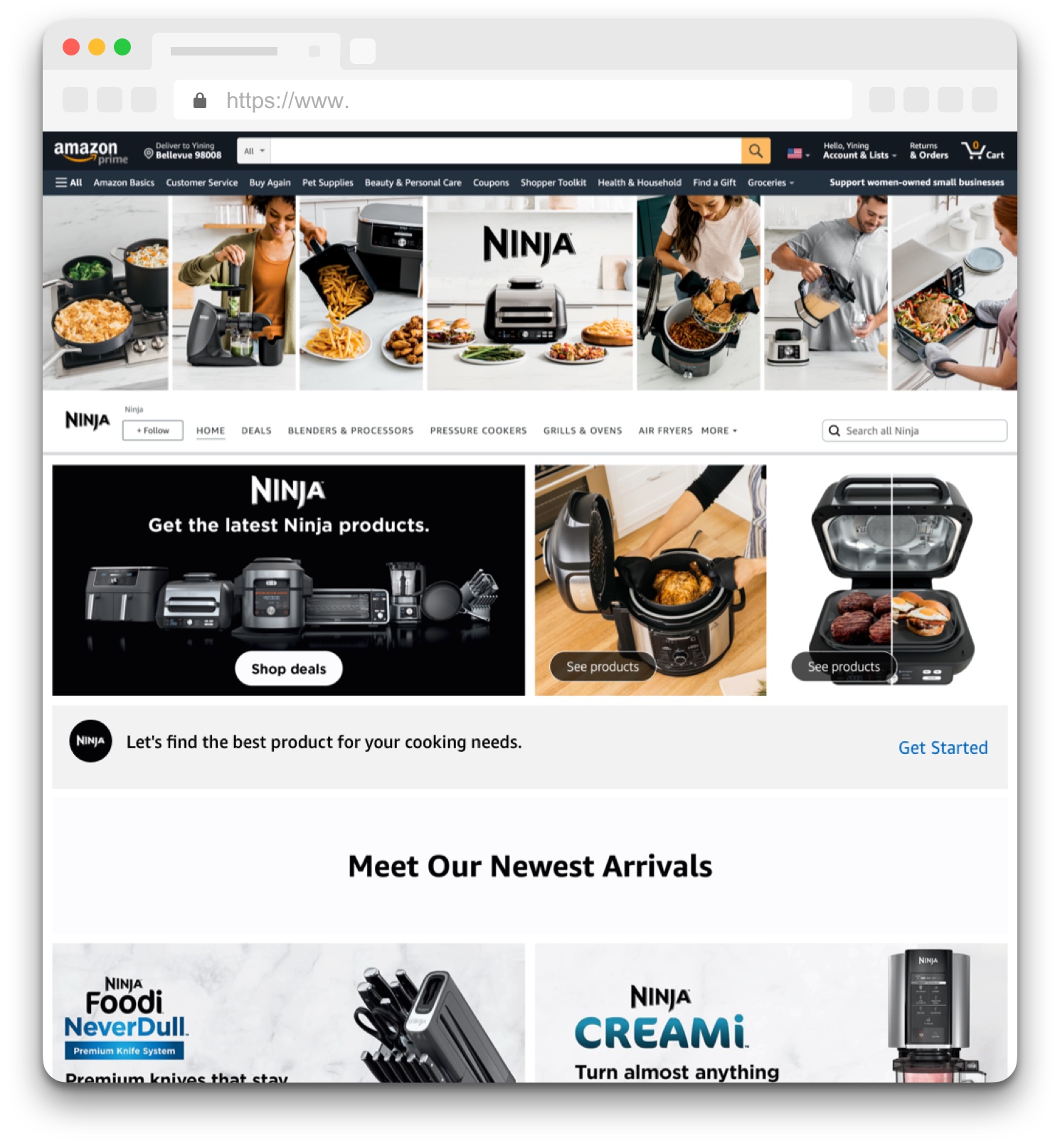
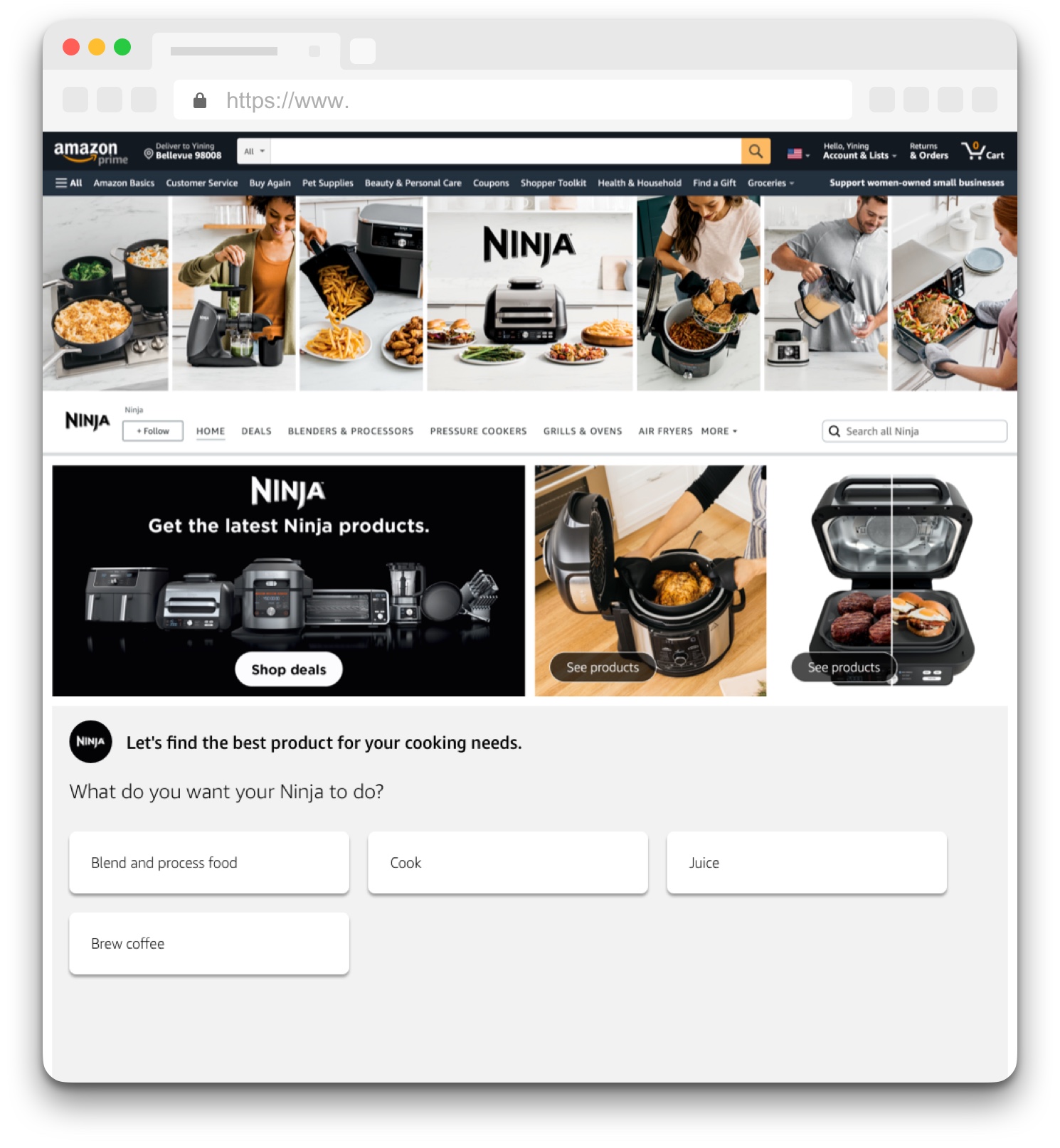
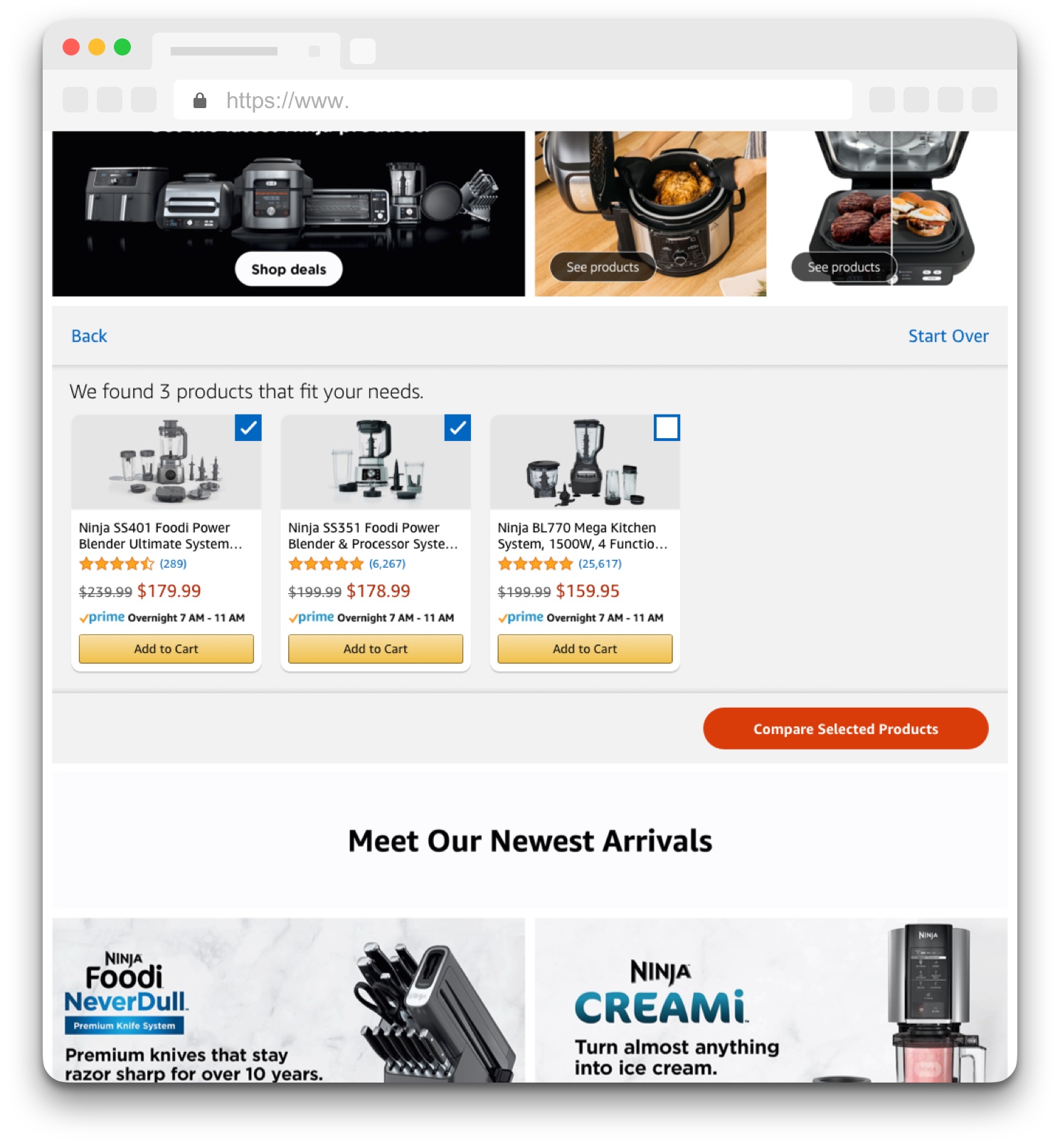
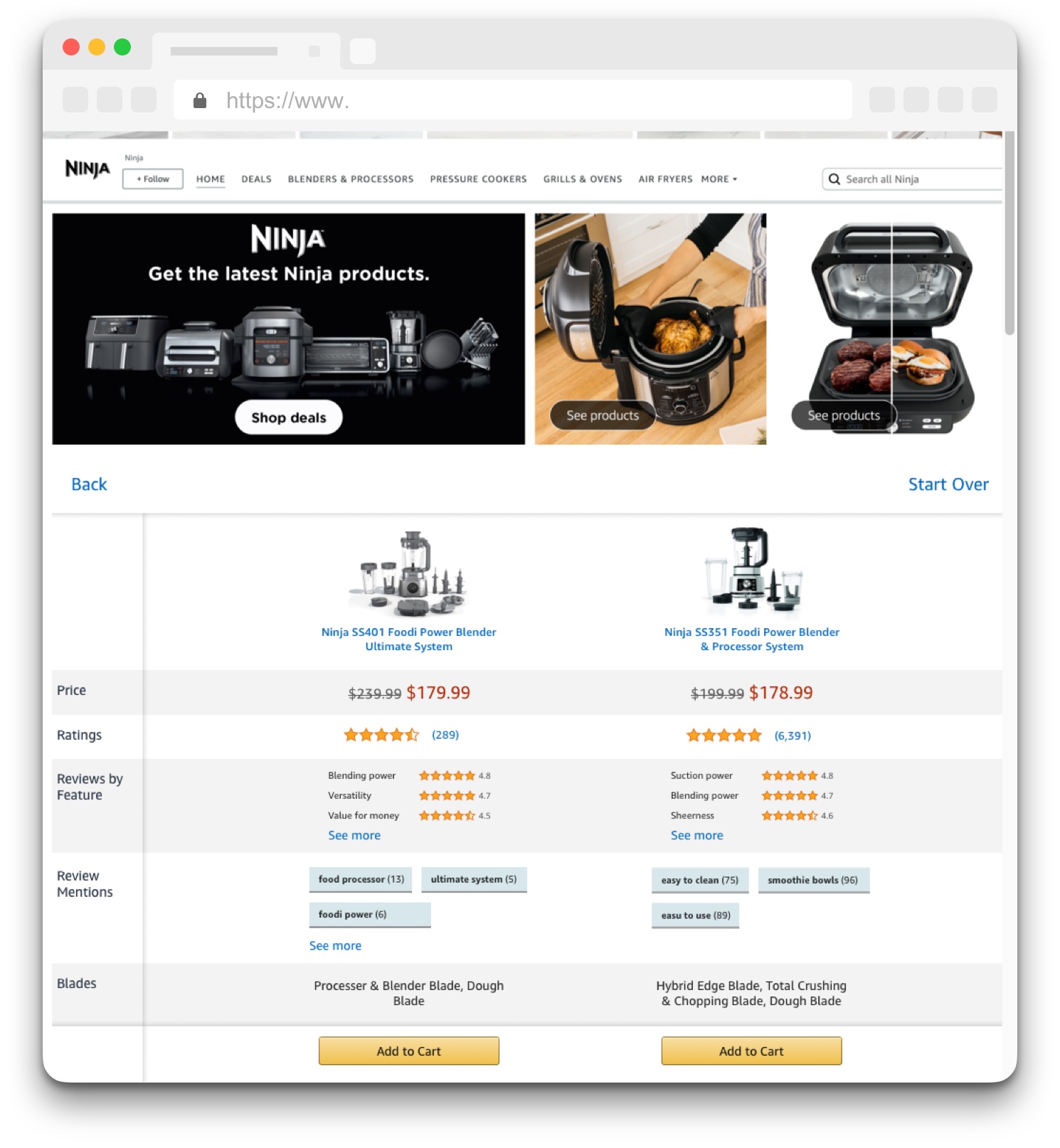
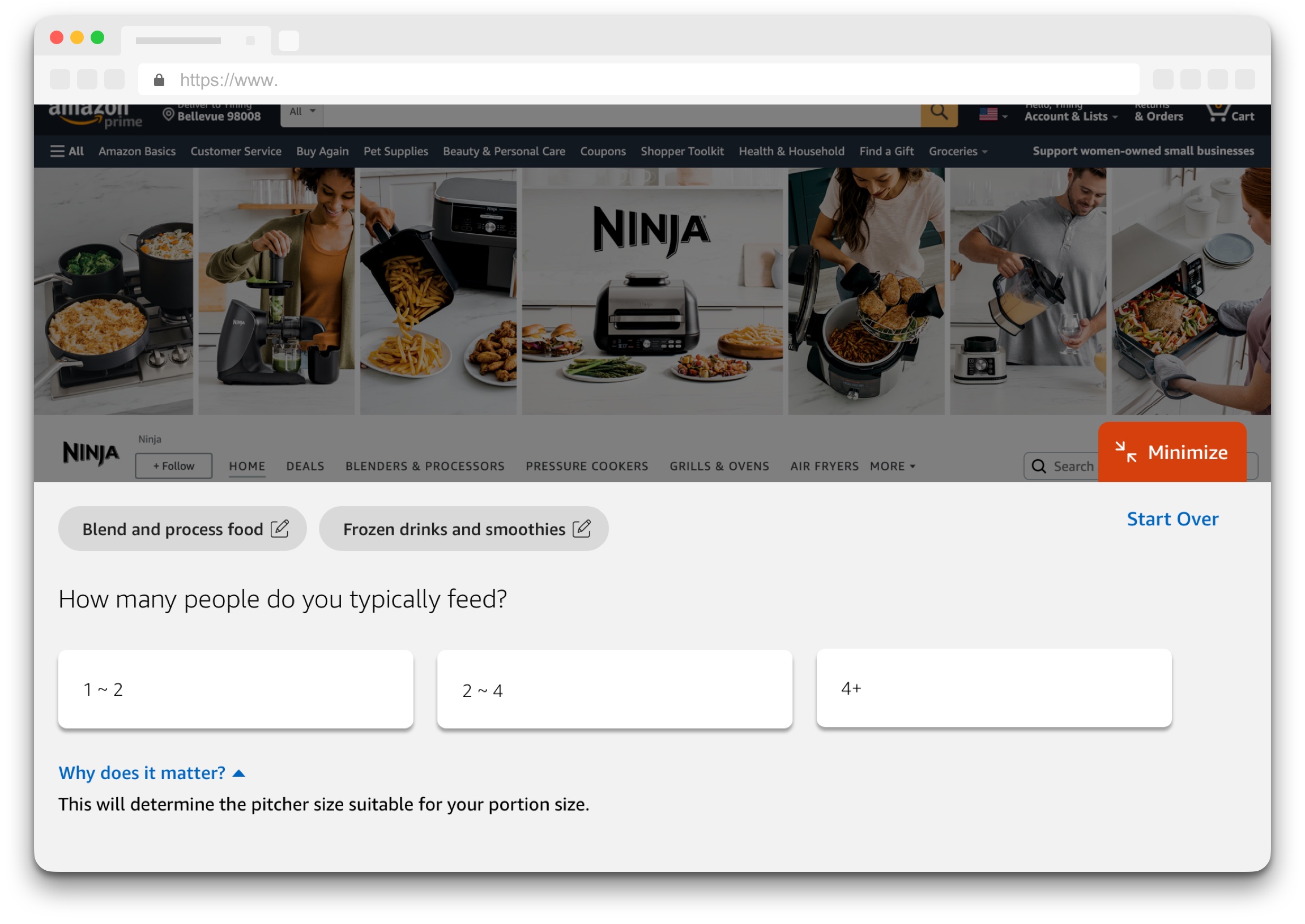
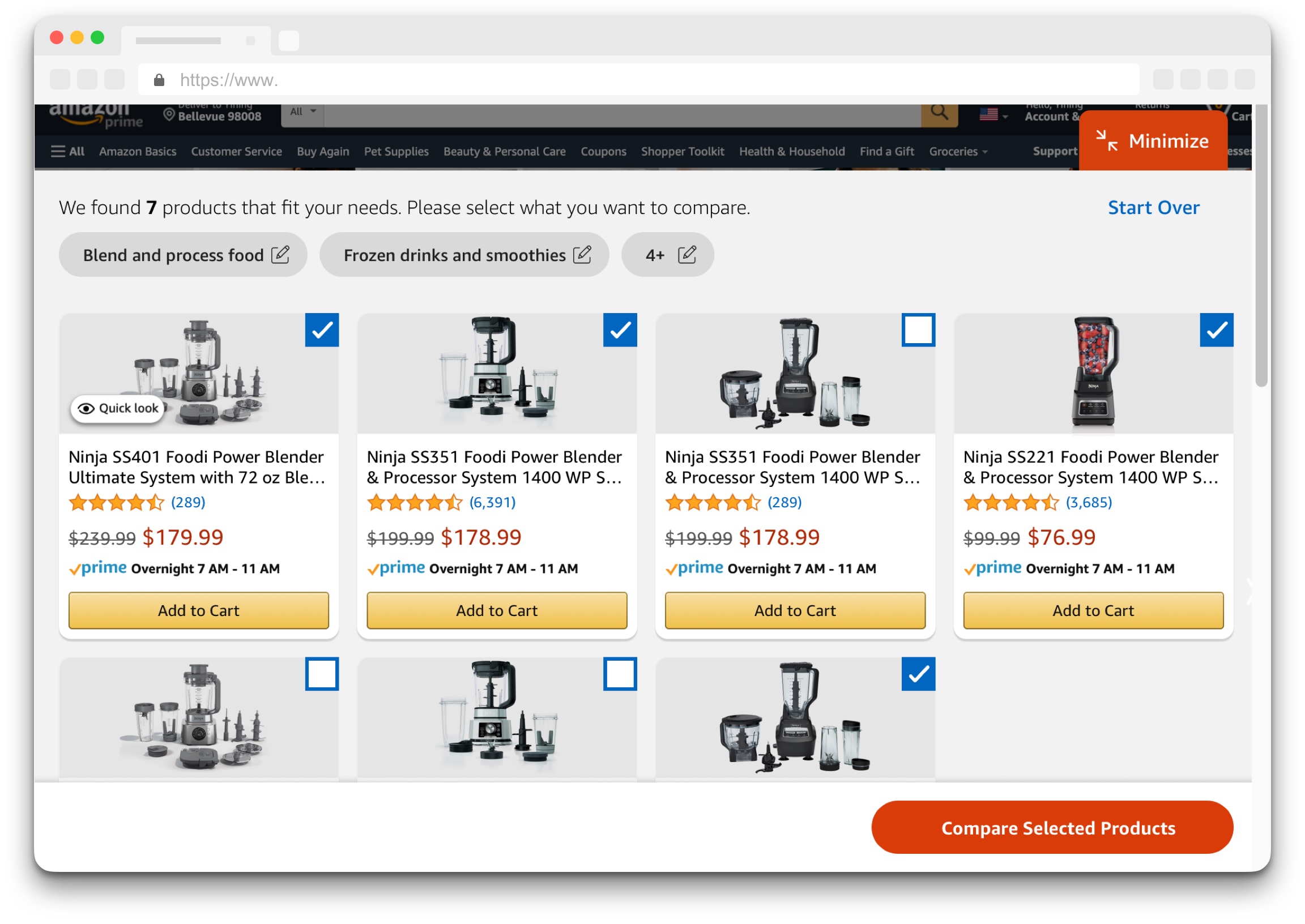
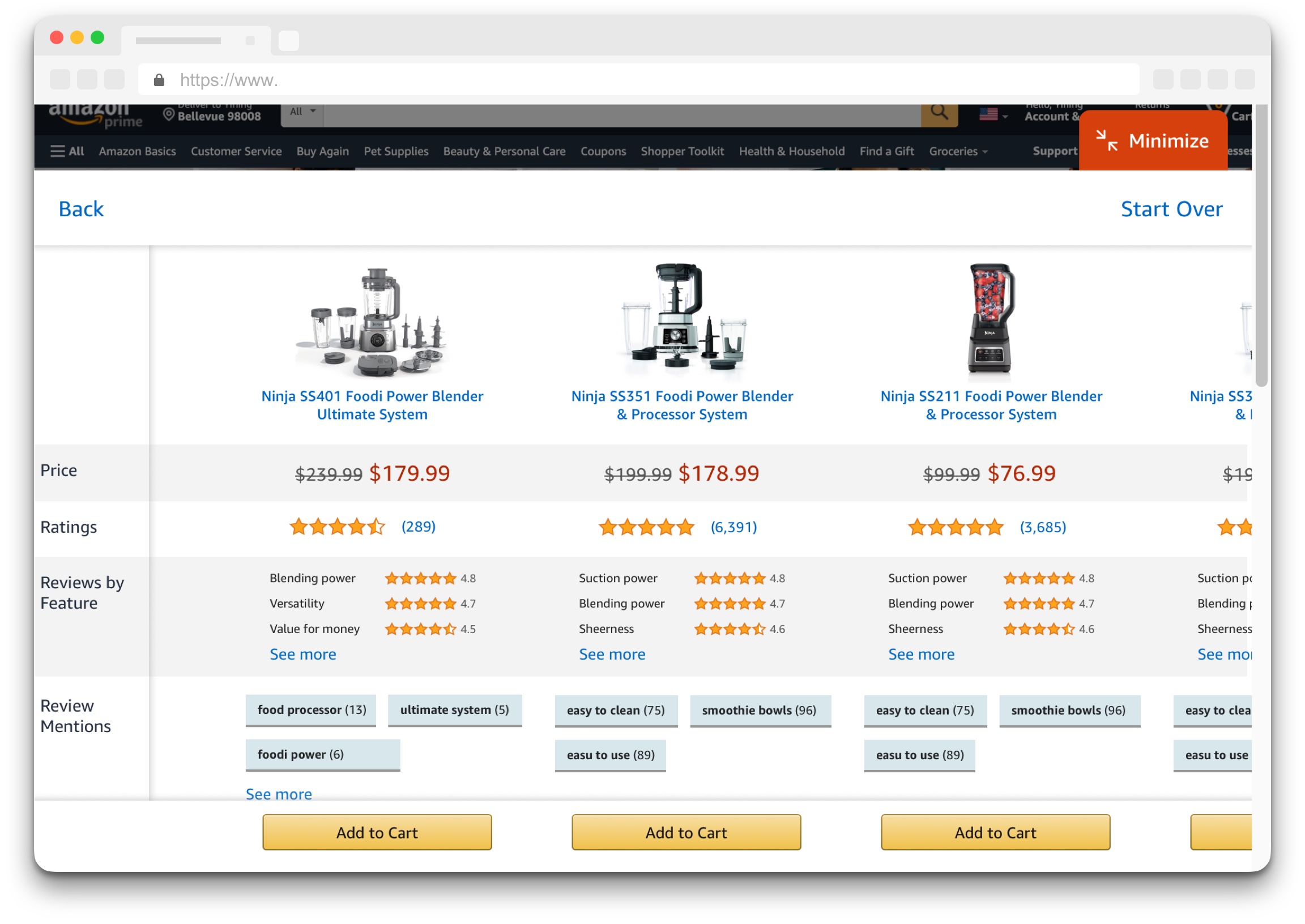
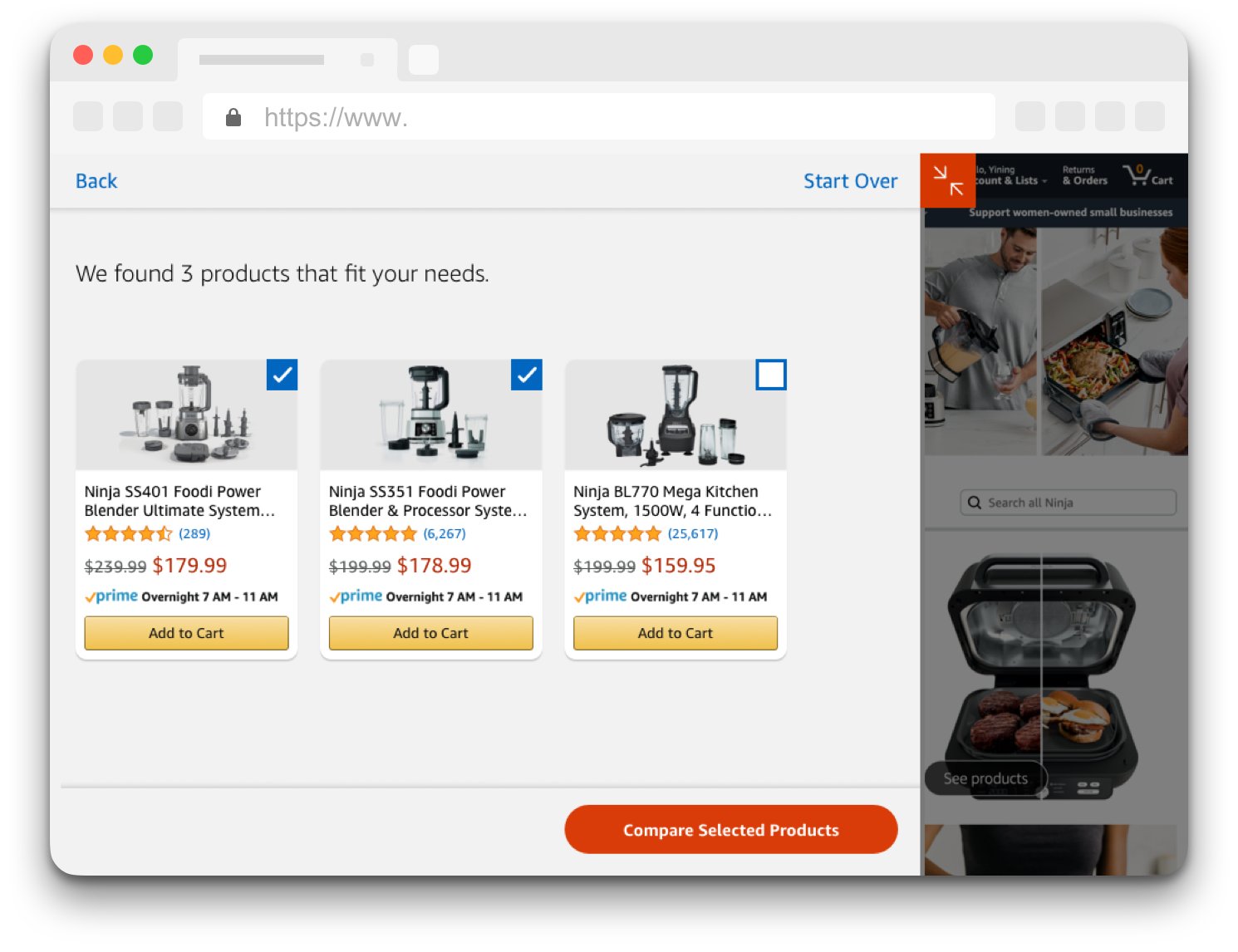
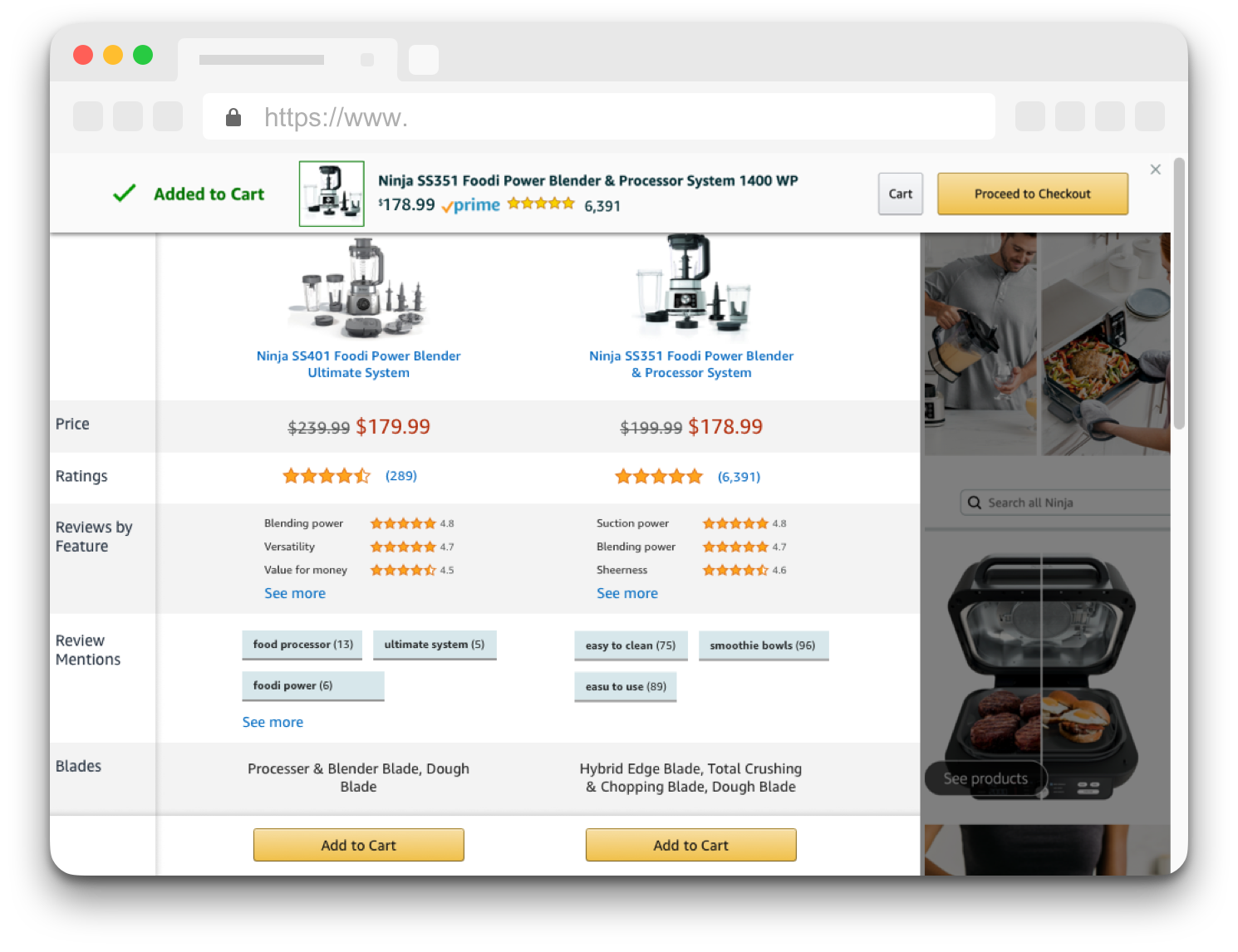
Compact Banner: Get Started Compact Banner: choose Blend and process food Compact Banner: compare selected products Compact Banner: product comparison table
Hover to explore
Compact Banner

Great for brands who want a visible, always-on presence without much vertical space, a fit for pages where strong photography is already competing for attention.
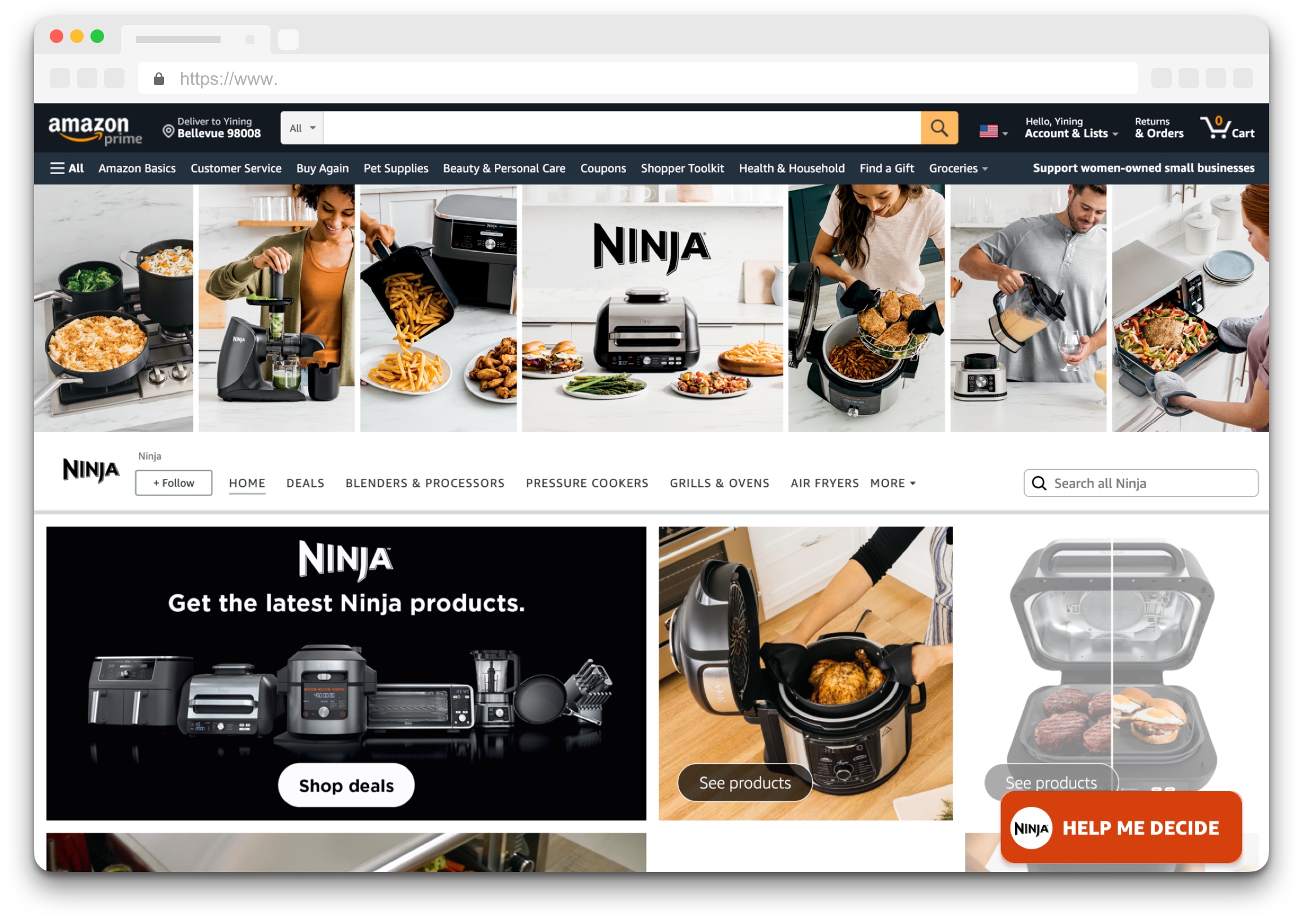
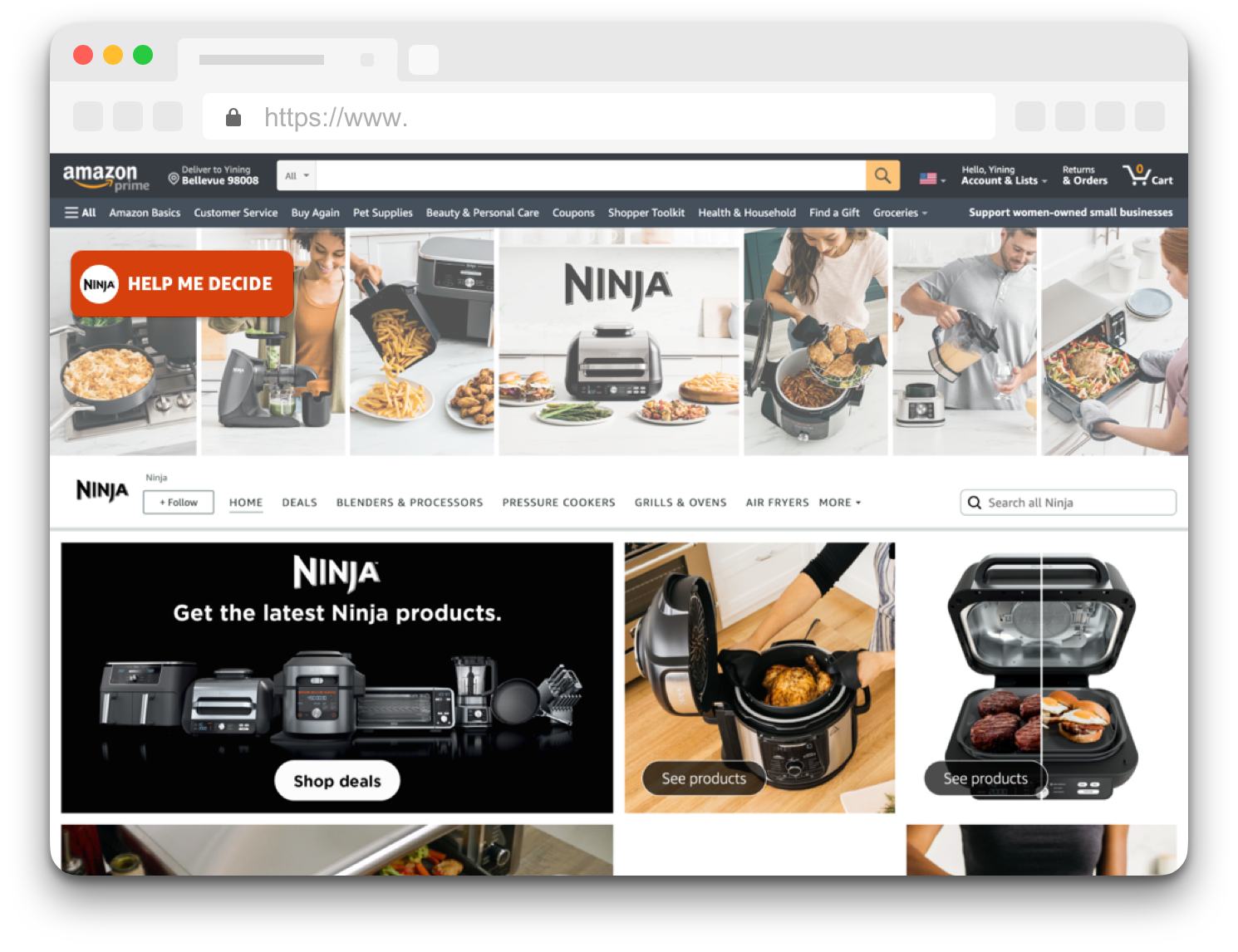
Point of Entry: single floating button Initial Greeting: branded question buttons Follow Up Questions: editable criteria trail Product Recommendation: expanding results view Product Comparison: side-by-side feature table
Hover to explore
Floating Button

Ideal when a brand's page is already at capacity. It stays out of the way until a shopper wants guidance, then expands to walk through the full flow, entry to comparison, without ever leaving the brand's page.
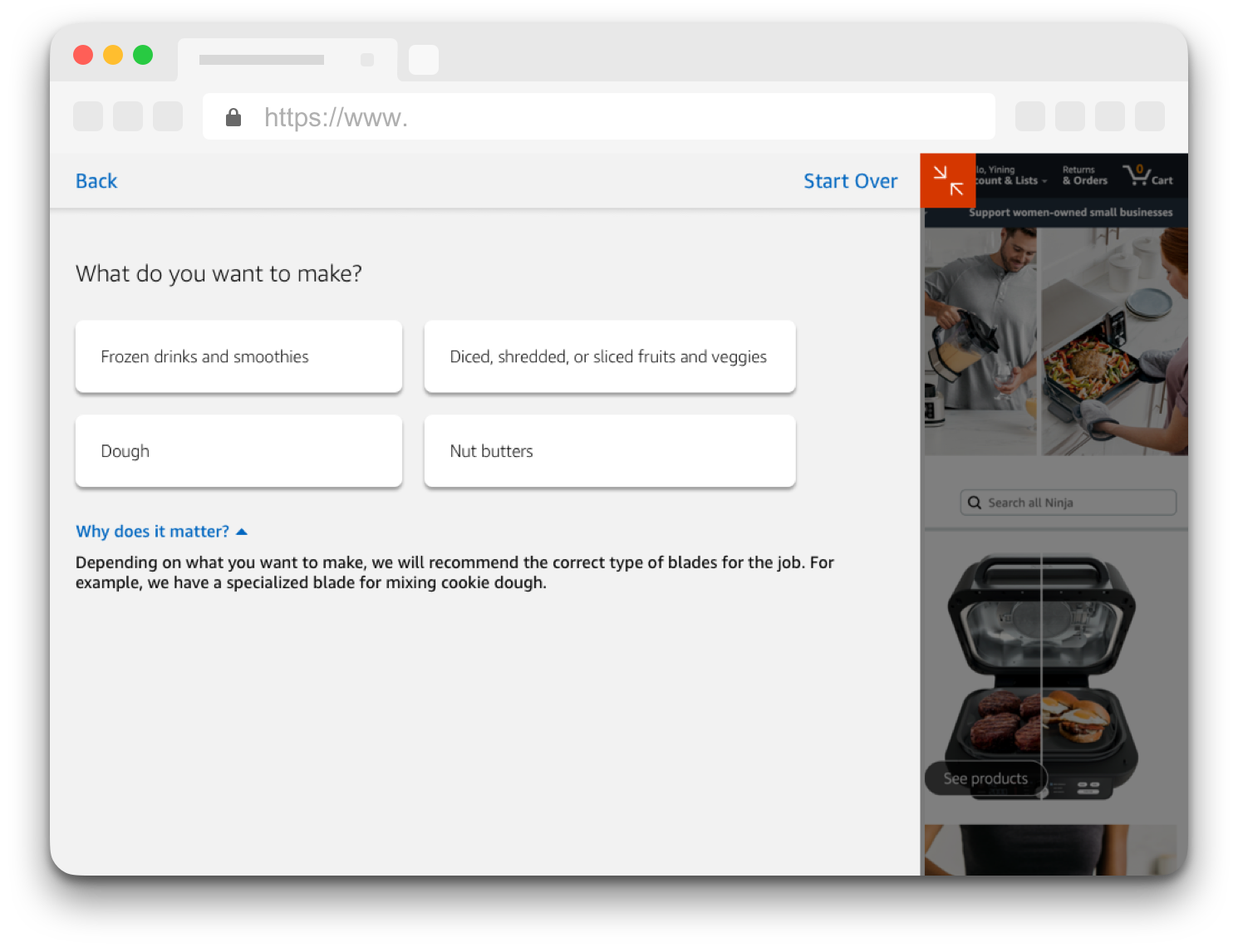
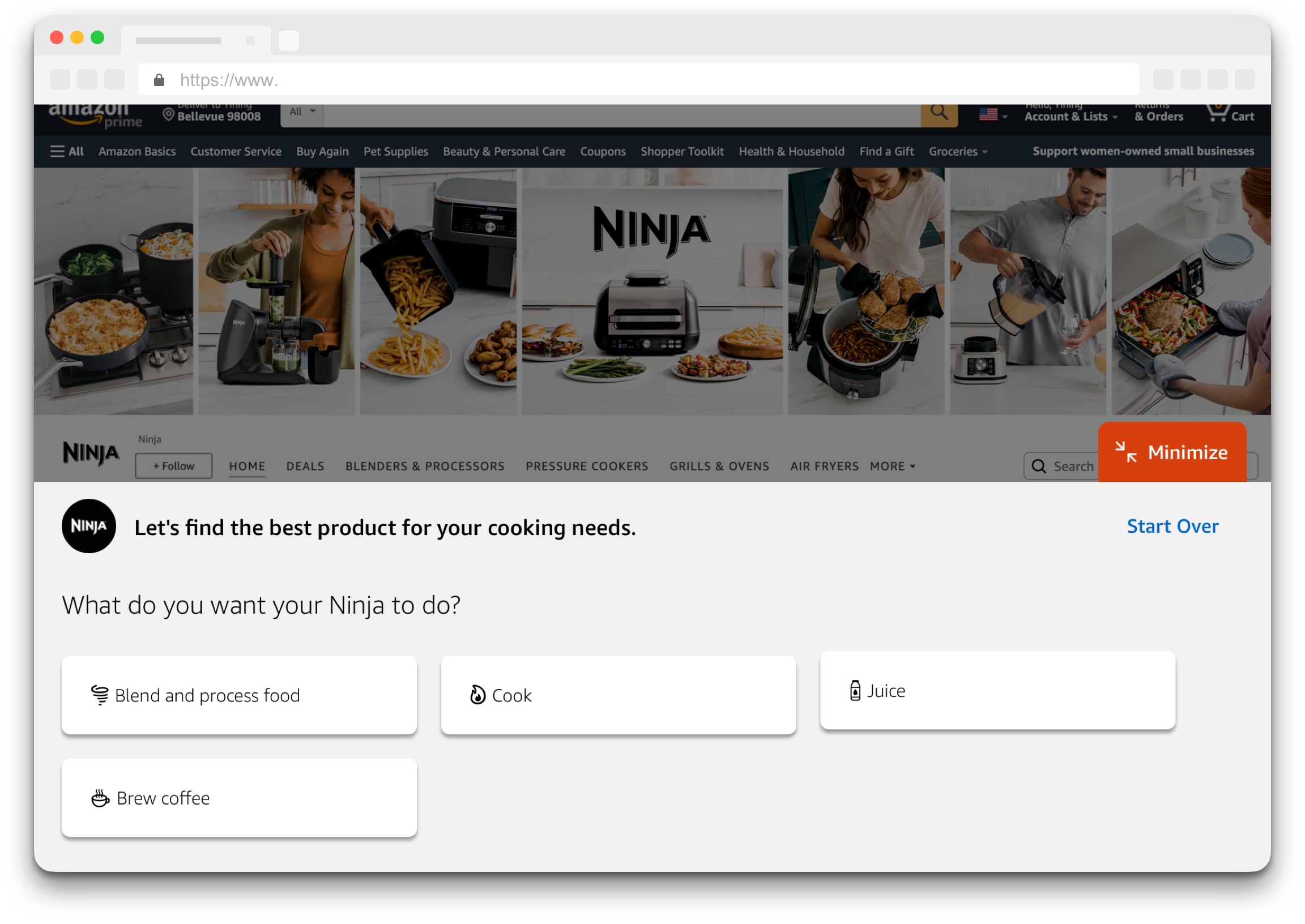
Side Slide: Help Me Decide entry Side Slide: choose Frozen drinks and smoothies Side Slide: matching products, compare selected Side Slide: comparison table, product added to cart
Hover to explore
Side Slide

Suited to brands with larger catalogs that benefit from generous screen space once open, especially for side-by-side comparisons. Placement needs care, since panels near the top can be covered by Amazon's own banners.

Results
Major brands adopted
124 Major Brands

Adopted the Shopping Assistant on their Amazon storefronts.

Monthly revenue
$1M+ Monthly
Revenue

Attributed directly to the Shopping Assistant experience.
Shopper interactions
4M+ Shopper
Interactions

Shoppers engaged with the assistant across adopting brands.

Brands waitlisted
375 Brands
Waitlisted

Waiting to adopt the Shopping Assistant next.

This work helped shape what came next: Alexa Shopping Assistant AI.

Our chatbot concept became a building block for the Alexa Shopping Assistant AI, now widely used across Amazon.
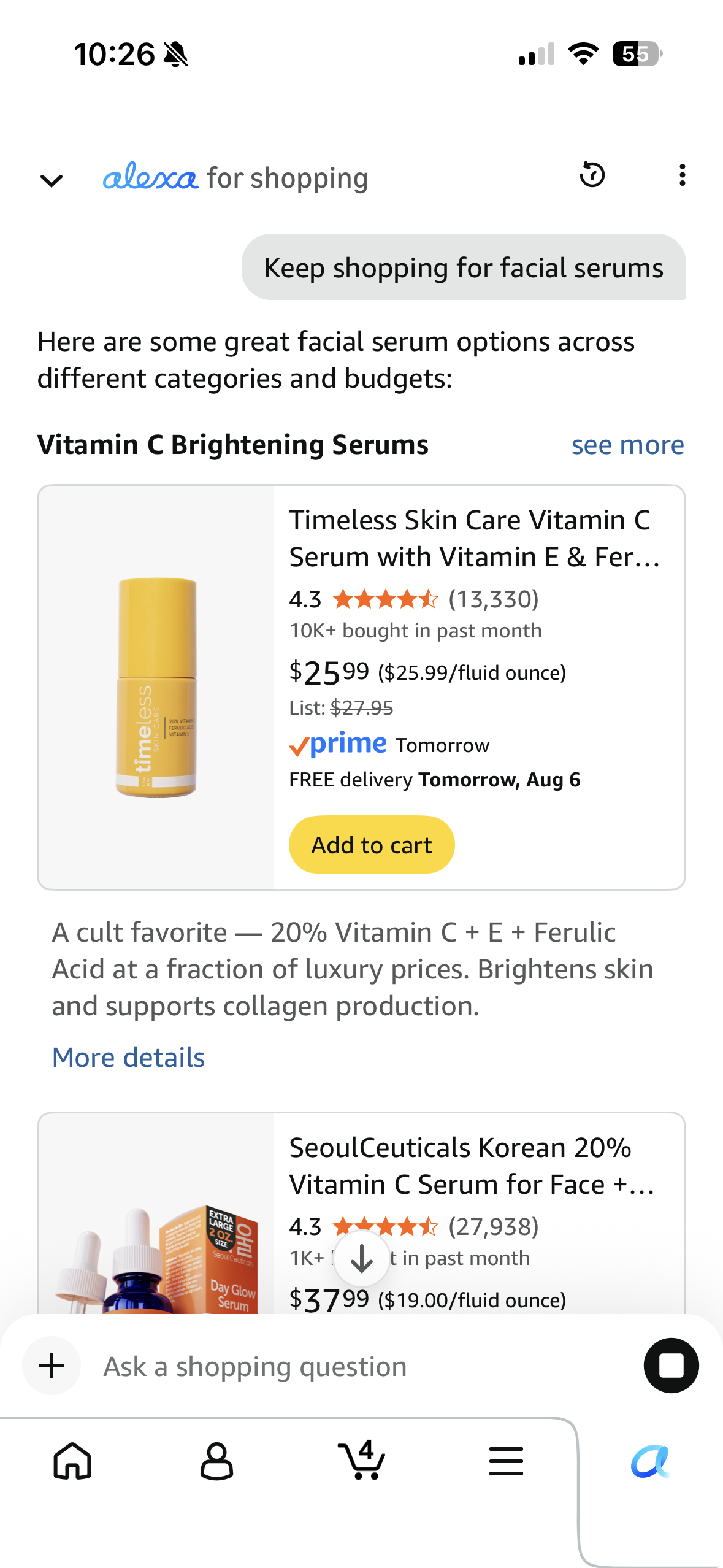
Alexa for Shopping AI assistant, mobile app

The Product Today

I worked on this in 2021-2022, under the name Amazon Shopping Assistant. My team kept building on it after I left, and it's shipped today as Product Selector. Here's an official Amazon Ads walkthrough, alongside Amazon's own guide: Build your quiz with Product Selector.

Here are two real brands using it live today:

0:00